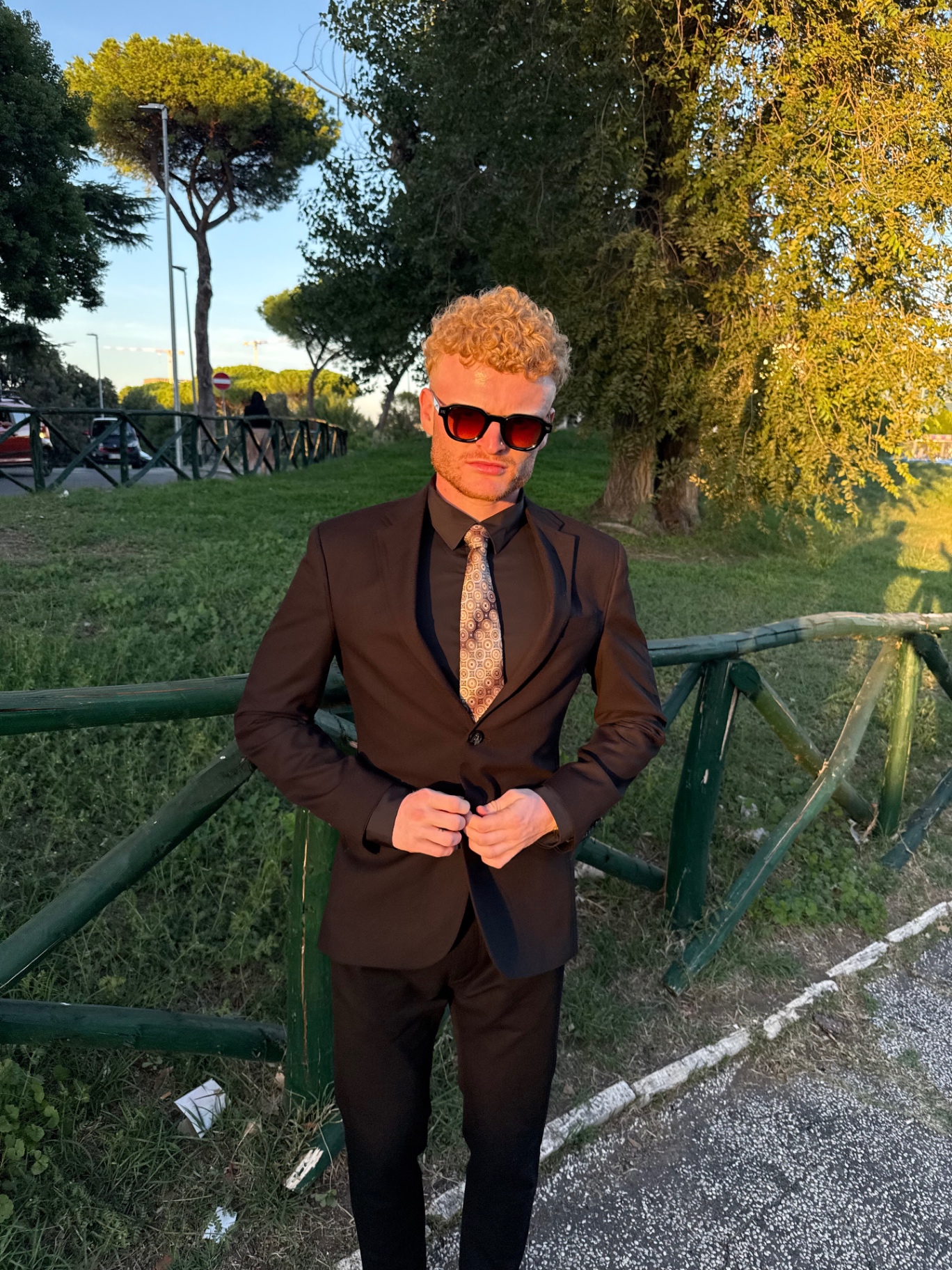
I was born with albinism. It is the first thing many people notice about me, and for a long time it was the thing I wished they would notice last. My skin, my hair and my eyes told a story before I ever opened my mouth, and I did not always like the story people decided to read.
Albinism also means I am legally blind. I see the world with low vision, which in practice means I sit closer, lean in, zoom in, and look longer. A whiteboard across a classroom, a street sign at a distance, the face of someone waving from across a room: these are things I have learned to approach differently. I have never known another way of seeing, so for me it was never a loss. It was simply my normal, even when the world around me was not built for it.
Questions people ask me
What is albinism? It is a genetic condition where my body makes little or no melanin, the pigment that colors skin, hair and eyes. Melanin also helps the eyes develop, which is why albinism affects vision.
What is nystagmus? It means my eyes move back and forth on their own. It is very common with albinism. The world does not look shaky to me. It just makes fine detail harder to hold.
So how do you work? I adapt. I use my iPad for almost everything, and I zoom in on my laptop. It is not a limitation in my work, just the way I do it.
Two cultures in one home
I grew up in Orange County, California, in a Mexican and Afghan family. That combination surprises people, and honestly, it shaped me as much as anything else. In one house I had two cultures, two ways of cooking, two kinds of music, two styles of humor, and two sets of expectations about family, respect and hard work.
Growing up between those worlds taught me early that there is never just one correct way to live, to celebrate or to see things. When you already look different, and your family story does not fit neatly into one box, you start to understand that identity is something layered. I did not have to choose one part of myself. I learned to carry all of it.
The years that were hard
I would be lying if I said it was always easy. As a kid I was bullied. Children notice difference quickly, and they are not always kind about it. I heard the comments about how I looked, I felt the stares, and there were days when I wanted nothing more than to blend in.
Those years hurt. I will not pretend they did not. But they also taught me something I still rely on today: other people do not get to write the definition of who I am. Being on the outside made me observant. It made me sensitive to how people treat each other, and it made me want to be the kind of person who makes others feel seen instead of small.
How fashion changed things
Somewhere along the way, I discovered fashion. At first it was a kind of armor. If people were going to look at me anyway, I wanted them to see something I chose. A well cut jacket, a color that worked with my complexion, a pair of sunglasses that protected my eyes and also looked good: these became small decisions that gave me back a sense of control.
Over time it became much more than protection. Fashion became a language. It taught me that how you present something changes how people receive it. Texture, color, proportion and detail all communicate before a single word is spoken. I did not know it then, but I was learning the foundations of branding through my own wardrobe.
Seeing closer
Because I cannot take in everything at a glance, I have learned to look with intention. I notice small things: the tone of a message, the detail in a corner of a design, the way someone reacts when they think no one is watching. Low vision forced me to slow down, and slowing down made me pay attention to what actually matters.
That is, at its core, what strategy is. Branding and marketing are exercises in attention. They ask you to decide what deserves focus and what can fall away, and to understand how a real person will experience something. I learned that lesson long before any classroom taught it to me.
Individuality as a strength
Today I see my albinism as part of my individuality, not something to hide. It is part of my perspective, part of my creativity, and part of the reason I care so deeply about people feeling represented and respected. The things that once made me feel different are the same things that now make my work my own.
I share this not as a story about overcoming something, but as a story about owning it. I was born seeing the world differently. I would not trade that view, because it is the one that made me who I am.
Back to Journal